After America, Before Nothing
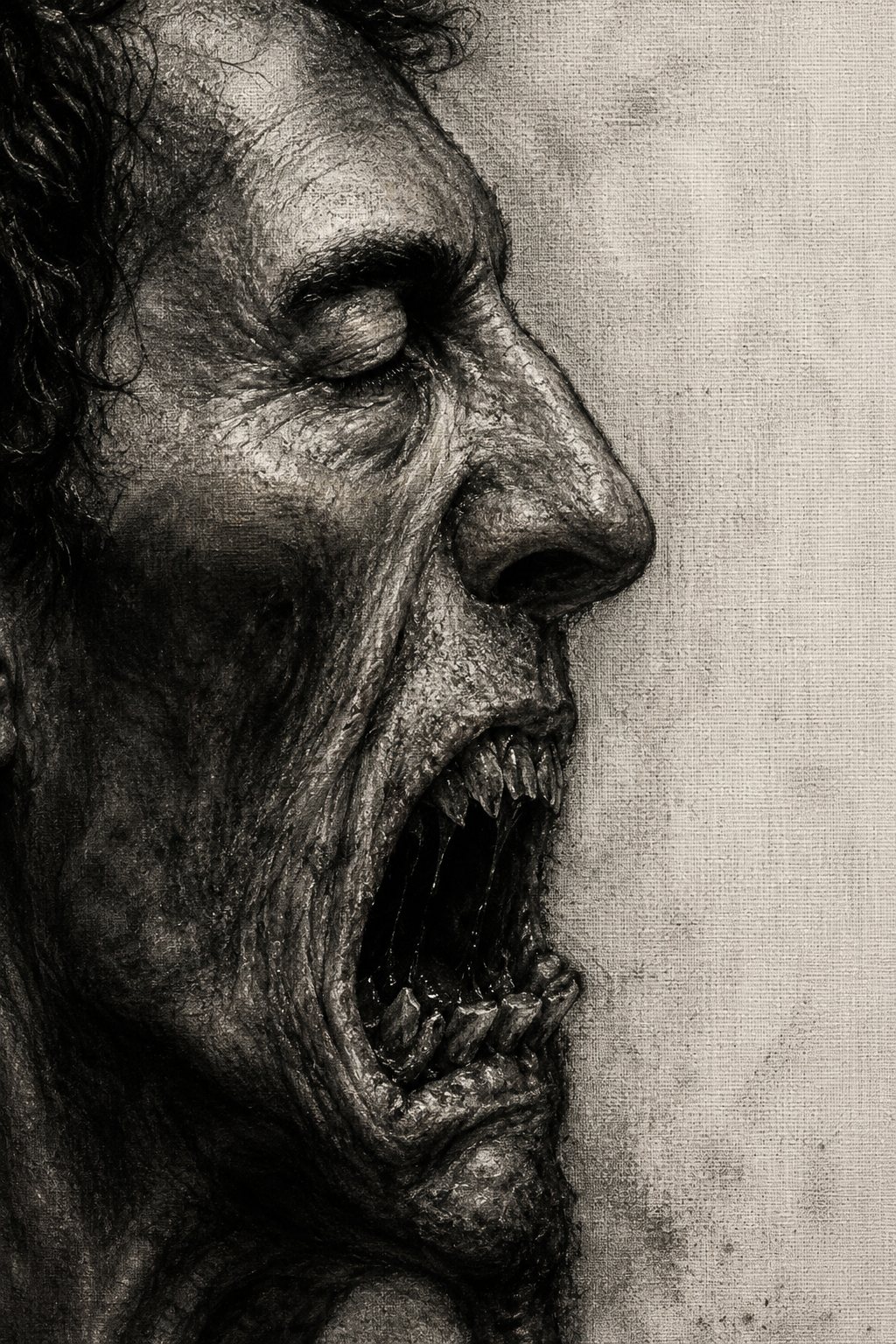
Acronyms used: IT means Information Technology, the broad world of computers, software, data, systems, and the human mess glued around them. NIH means National Institutes of Health, the major American federal agency that supports biomedical research. VA means Veterans Affairs, the American healthcare system for military veterans. SQL means Structured Query Language, the standard language used to query and manage relational databases.
The most insulting thing about returning from America is not poverty. Poverty at least has old manners in Calcutta. It sits on the bed, asks for tea, and tells you it has known your family for generations.
The insult is smaller and sharper.
It is the cheap plastic chair.
You sit on it in a rented room in the southern fringe of Calcutta, and suddenly fifteen years in America begin to sound like something you made up during a fever. Serious healthcare IT work. Hospital data. VA pipelines. NIH studies. SQL scripts. Clinical systems. Meetings where people argued about data because data actually mattered. All of it becomes faintly unreal beside a damp wall, a tired fan, and a table that trembles if you place a cup of tea on it with too much ambition.
This is how the past loses court cases. Not with evidence. With furniture.
In America, I was not happy. Let us not decorate the fish and call it a wedding. I had depression there too. Anxiety too. Loneliness too. The usual private circus, with the clown crying quietly behind the tent.
But I was useful.
That is not a small thing. A man can survive a surprising amount if some part of the world still says, yes, this fellow knows how to fix something.
I worked with healthcare data that had passed through hospitals, doctors, nurses, research studies, federal systems, and the great American paperwork machine, which is like a rhinoceros wearing reading glasses. Slow, heavy, dangerous, but at least pretending to be rational. When a data pipeline broke, it was not dismissed as “computer problem,” that magical phrase used in India to bury everything from a dead mouse to a national disaster. It meant something. A missing record could affect a study. A wrong date could confuse an outcome. A badly mapped field could turn a patient’s real life into administrative fog.
The work was not glamorous. Nobody was standing nearby with a violin.
But it was real.
There is a deep comfort in real work. Even when it is ugly. Especially when it is ugly. You open the machine, find the jam, remove the bent nail, wipe the grease from your hand, and for one minute the world behaves.
Then I came back to Calcutta.
Calcutta did not say, “Welcome back, experienced man, please bring your knowledge and help us improve things.”
Calcutta said, in its old half-sleeping voice, “Accha, very good, you were in America. Now who do you know?”
That is the whole entrance exam.
Not what you built.
Not what you repaired.
Not what you understand.
Who do you know?
This is where competence becomes an amusing foreign allergy. You bring back habits like documentation, ownership, deadlines, payment terms, source of truth, maintenance, testing, accountability. People look at you as if you have brought a snow shovel to Garia in May.
Interesting object.
Completely unnecessary.
I had known systems. Here I met arrangements.
A system, even a bad one, has bones. An arrangement has elbows. It nudges, delays, flatters, forgets, calls after three weeks, says payment will come next Monday, and then silently changes the calendar to a Monday in another civilization.
This is not a grand political statement. I am not standing on a broken footpath waving a flag. I am a 51-year-old single Bengali man in a small rented life, trying to keep body, mind, laptop, tea, and invoice from collapsing into one untidy heap. My politics is mostly whether the power will go during a heat wave and whether the person who owes me money has once again discovered a sick aunt.
But even from a small room, one can observe large patterns.
India has many brilliant people. That is not the issue. Bengal alone has produced enough intelligence to power a small moon, though naturally we would first form a committee to decide who gets to switch it on. The problem is that intelligence here is too often made to crawl through narrow social pipes. Competence must attach itself to patronage. Skill must wear humility like a school uniform. Payment must be pursued with the delicacy of a man asking for a kidney.
In America, I learned that systems can be cruel, but they usually know they are supposed to function.
In India, too often, the performance of functioning is enough.
Meeting done.
Photo taken.
Tea served.
Nothing works.
Everyone goes home.
This would be funny if it did not eat years of life.
The humiliation is not only financial. Money is part of it, of course. Money is not everything, as comfortable people say while standing near their refrigerator. But money pays rent, fixes teeth, buys medicine, replaces a broken chair, and prevents the soul from developing the texture of stale muri.
The deeper humiliation is that the present starts bullying the past.
You say: I worked in America.
The room says: Then why are you here?
You say: I handled healthcare data.
The unpaid invoice says: Very impressive.
You say: I built things.
The cracked wall says: Build me first.
Slowly, you begin to doubt your own biography. This is the nasty magic of downward mobility. It does not merely reduce your income. It edits your memory. It takes your achievements, folds them badly, and stuffs them into a drawer with old cables, expired medicine strips, and one mysterious key that opens nothing.
And the world asks the cruelest question.
What are you doing now?
Not what did you survive?
Not what did you learn?
Not what can you still do?
Now.
It is a small word with a police baton.
If the answer is “some consulting, irregular payment, health not good, mind worse, trying to write, trying to recover, trying not to vanish,” then the listener’s face changes. Not always cruelly. Sometimes worse: politely.
Politeness can be a very sharp knife when held by the comfortable.
Meanwhile, outside, Calcutta continues its daily epic. Someone is frying telebhaja in oil old enough to remember Jyoti Basu. A bus conductor is shouting as if personally betrayed by geography. A man on a scooter is carrying a gas cylinder with the confidence of a minor god, though I do not believe in gods and have no desire to meet one in traffic. A child in school uniform steps around garbage with the grave balance of a tightrope walker. Somewhere, someone is discussing artificial intelligence while the lift has not worked since Tuesday.
The city is absurd.
I am absurd inside it.
That is at least a kind of symmetry.
What hurts most is that my mind did not shrink to fit my life. The room became small, but the mind kept remembering larger rooms. Hospital offices. Research meetings. Long American highways. Fluorescent corridors. Database tables. Broken feeds. Clean fixes. Bad coffee. Serious deadlines. The small satisfaction of being needed by a problem.
Now some days have only five nouns.
Tea.
Heat.
Rent.
Tooth.
Silence.
On bad mornings, even those feel ambitious.
Depression does not arrive in a black cape. It arrives as a failure to begin. The toothbrush becomes a project. Bathing becomes an expedition. Opening the laptop becomes like lifting a shutter on a shop after a riot. Nothing dramatic happens, which is the drama. The day stands there, hands on hips, asking what exactly you plan to do with it.
And yet.
Here is the inconvenient little ember.
I still know things.
I know how systems lie. I know how data loses meaning while pretending to become cleaner. I know how organizations create confusion and then hire software to laminate the confusion. I know how people hide bad process inside good vocabulary. I know how a report can look intelligent while quietly eating the truth with a spoon.
This knowledge has not expired just because I now live in a smaller room.
A passport can expire. Competence does not, though it can become dusty, angry, underused, and suspicious of human beings.
The trick, perhaps, is not to worship the American past like a framed certificate. That way lies more sorrow. America was not heaven. It was a country with working plumbing and institutional loneliness. It gave me work, structure, seriousness, and a kind of professional oxygen. It also took its share from me. No country is innocent. Countries are large animals. They step on you without noticing.
But I must not let Calcutta’s present declare the past fraudulent.
That is the line.
A bad chair is not a verdict. A rented room is not a biography. An unpaid client is not a philosopher. A society that cannot recognize a certain kind of skill is revealing its own cataract, not your invisibility.
Still, one must be practical. Dignity cannot live only on sentences. It needs boundaries. It needs payment before delivery. It needs smaller promises and harder refusals. It needs less rescuing of unserious people. It needs writing. Teaching. Explaining. Consulting only where seriousness shows its face before the invoice grows a beard.
I cannot become young again. I cannot become American again. I cannot become cheerful on command, like a table fan with three speeds.
But I can remain legible to myself.
That sounds modest. It is not.
In a world that keeps trying to reduce a man to his current rent, his current income, his current usefulness, remaining legible to oneself is a small rebellion. Not a glamorous rebellion. No drums. No slogans. More like keeping one match dry during monsoon.
After America, before nothing, there is this corridor.
It is narrow. It smells faintly of old paint and worry. One tube light flickers. One door says past. One door says unpaid. One door says try again. One door says not today. One door has no label.
I am still standing there.
Overeducated, underpaid, irritated, frightened, technically alive.
Not saved.
Not finished.
Not nothing.